Sunday, September 21, 2014

Day 7 (Video Clip)

Day 7


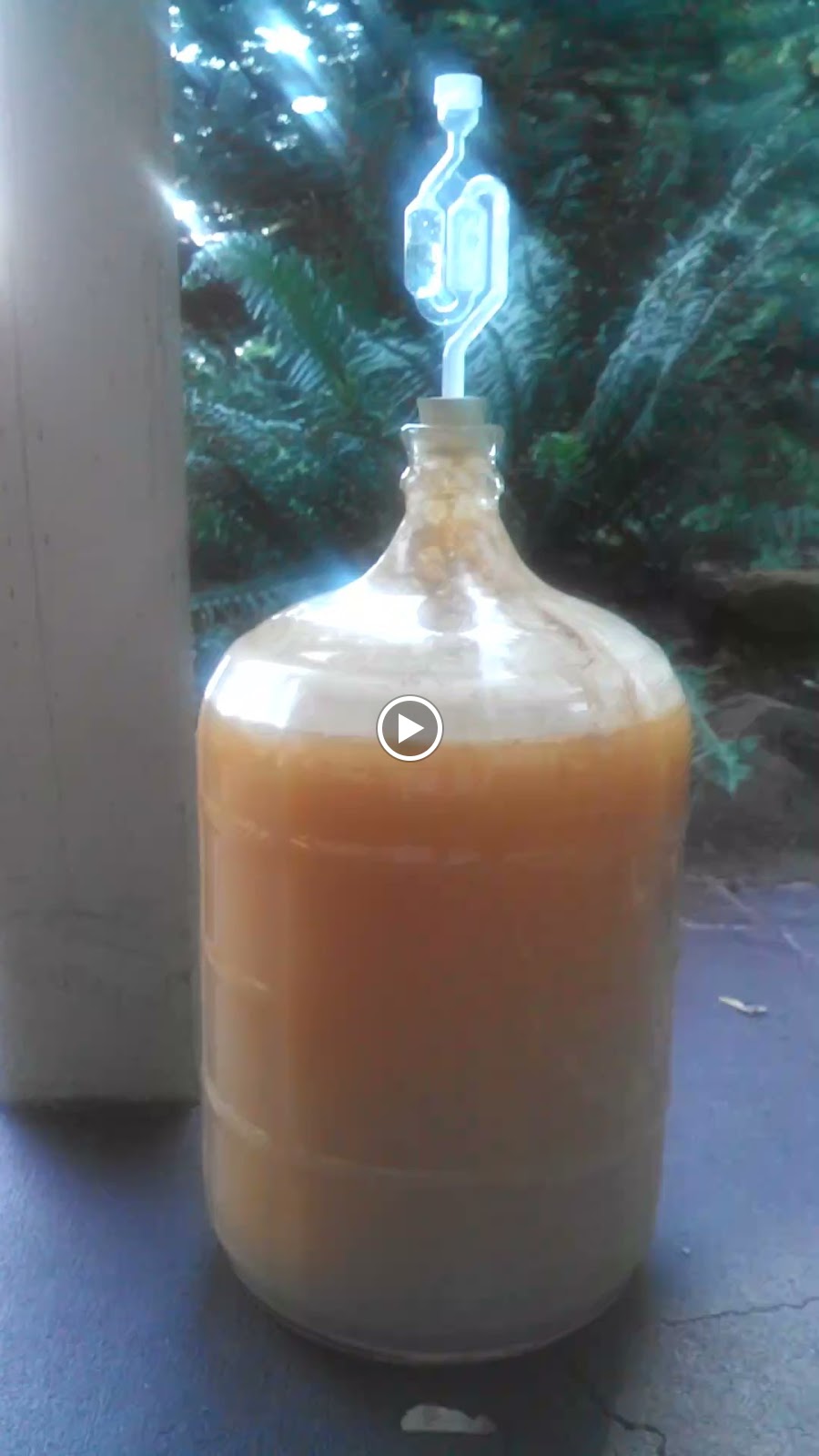
Looking very closely at the meniscus of the cider, I see tiny bubbles rising to the top, confirmed by the bubbling sound from the airlock.

The cider's color has noticeably changed from amber to a very golden yellow.


Saturday, September 20, 2014

Day 6 (Video Clip)

Day 6

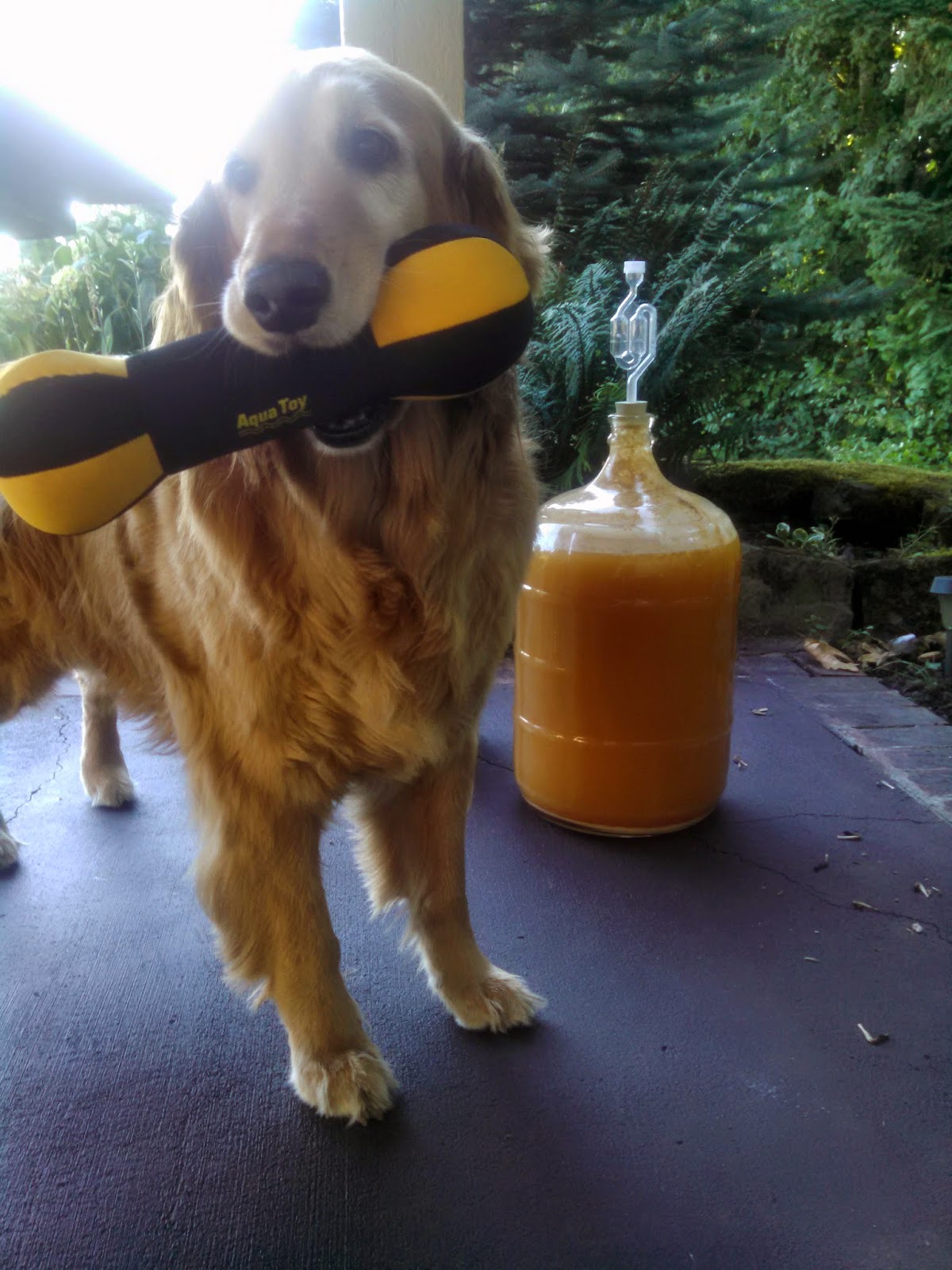
Compared to yesterday, the bubbling in the airlock is slowing a bit.


The color of the cider looks different today.  The focus of the video clip I took this morning was on the airlock bubbling.  I wasn't so concerned about capturing the color of the cider.  The camera did that for me.  It is more golden today.


Speaking of golden, this is Teddy, the photo bomb king.  Curious about everything, Teddy and his perpetual motion tail manage to get in on everything.  His fur color seems to match the cider!


Friday, September 19, 2014

Day 5 (Video Clip)

Day 5

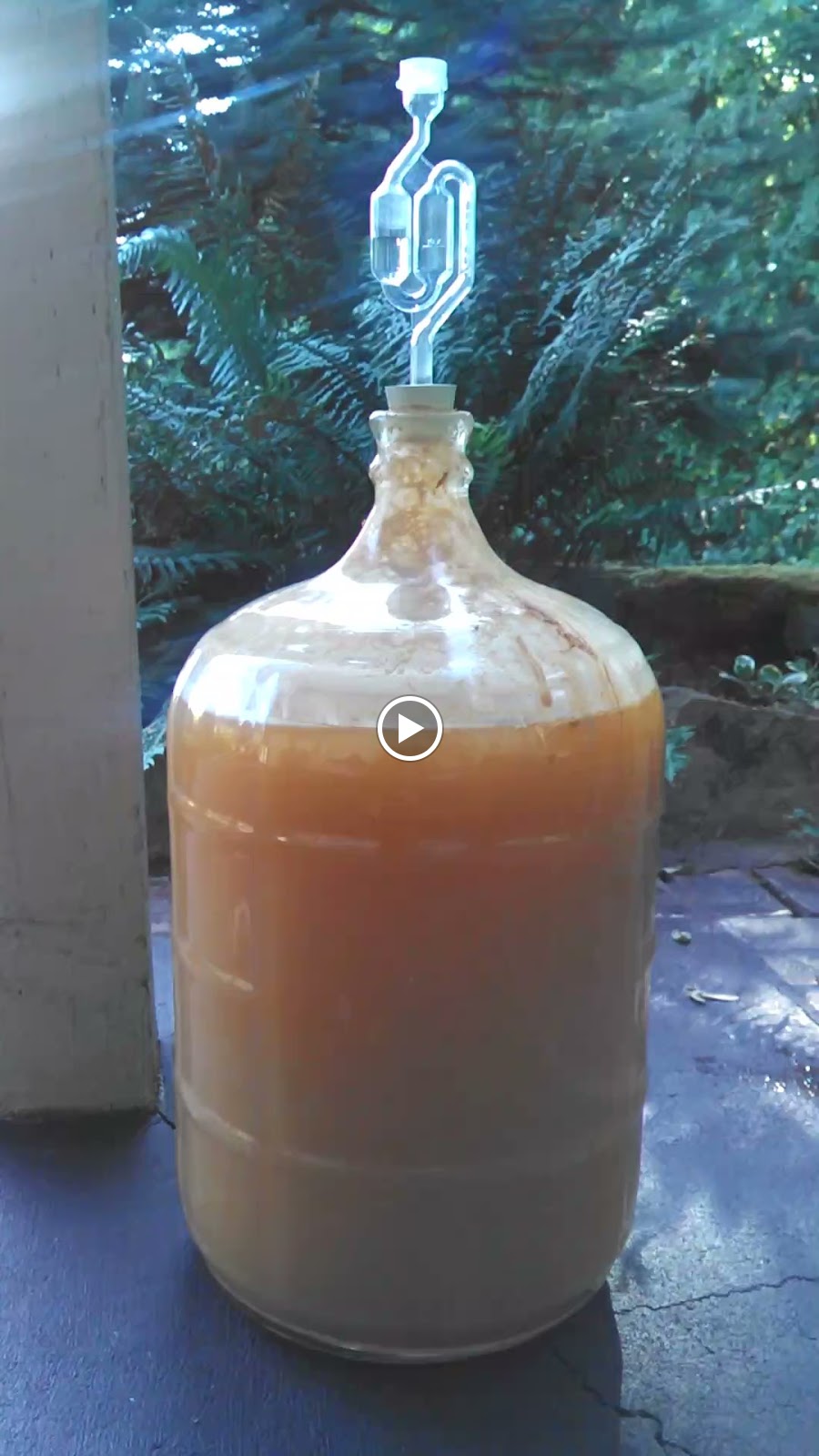
We installed the airlock this morning.  The little water column inside the airlock (left side) allows the gases to escape through the water and out of the perforated closure without allowing ambient air to come back inside the carboy.

You can see the process in this short video clip.


Thursday, September 18, 2014

Apple Varieties We Didn't Juice This Year

Not every year produces a bumper crop.

These are the varieties in my cider orchard that we didn't include in this year's juice pressing:

Calville Blanc (1598)

Planted in King Louis XIII garden at Orleans in 1627.  Originating in France/Germany around 1598 and grown for Louis XIII, Calville Blanc is higher in Vitamin C than an orange.  Sometimes referred to as the dessert apple of France because it holds up beautifully in baked goods.

I love the color and shape of this apple.  The color is a very pale spring green with a handsomely striking red blush.  The contrast is remarkable.  The shape is described as somewhat "oblate."  As you can see from the second photo taken of the bottom side of the Calville Blanc, it has very pointy indentations that gives it a flattened heart shape.


 Bottom of the Calville Blanc


Calville Blanc (left) compared to a Winter Banana (right)
It has an unusual shape in comparison to modern apples, as it is more oblate than round and has very distinctive ridges toward the bottom.  As you can see it is flatter, wider and shorter, common for the extremely old varieties.


Arkansas Black (1870)

Originated from a Winesap seedling in an orchard in Bentonville Arkansas in 1870.  A beautiful dark red apple, considered to be the best storage apple, keeping all winter.  A winesap is essential in cider.  Arkansas Black needs the Winter Banana for pollination.  This is a lovely deep burgundy apple, appearing to be nearly black in some light.


Ashmead's Kernel (1700s)

An ancient English variety about 300 years old, it was raised by Dr. Thomas Ashmead of Gloucester, England. The flavor has been described as "strong, sweet-sharp intense."  The apple's flavor is intensely strong when first picked, but sweetens and mellows greatly after several weeks in storage.  High sugar content, good acid balance. This variety is most often included in cider making.


Roxbury Russet (1640)

Presumably, the oldest apple variety of North America.  Found in Massachusetts in 1640, thought to have been planted by European immigrants.  Great cooking, cider & keeping apple.   Sugar content is very high (12.87%).  Roxbury Russet is a large apple no longer found on the commercial market.  An excellent keeper until April or May.  A delicious apple for cider.

Very similar to the Golden Russet, although older and perhaps just a little sweeter.

Day 4

Day 4


Doesn't look much different, but I can see that fermentation has slowed.


Wednesday, September 17, 2014

Day 3

Day 3


I noticed that the foam has settled down a bit and when I loosened the elastic band, I heard a little gas escape.  It seems fermentation may be slowing a bit.

Tuesday, September 16, 2014

Day 2

Day 2


It looks like our fermentation process is active enough to have caused a little eruption.


I've been advised to loosen up the elastic band.  So that is what we've done this evening.  Once the fermentation stops/slows, we'll drain off the sediment.

Monday, September 15, 2014

Day 1 (Post Pressing)

Day 1


About 1 inch of foam on top of the cider.  Fermentation has begun.


So How High Will It (You) Get?

Hygrometer


I was pretty tired by the end of day two picking, chopping, shredding, pressing, pouring, repeat.

So doing the math for cider chemistry at the end of the day was a little taxing.  We used a hygrometer to determine the specific gravity of the juice to measure the sugar content.  A formula provided by our local home brew/wine making supply helped us to determine how much sugar to add to reach the alcohol content of our choosing.

My friend, Elaine, thought that one should get something out of all that hard work and not leave the alcohol content at a low 4-5% like simple beer.  Agreed.  We decided to shoot for 12%.

After adding the sugar, we hadn't adequately dispersed it through the heavy carboy, so we added more sugar when the hygrometer reading was still a little low.  After everything settled out, we realized that our alcohol content may be closer to 14%.  Most definitely not a lowly 4% beer.


Our friends pressed a batch of grapes to create this lovely pinkish grape juice on the left.


First 5 Gallons

The First Five Gallons Take the Longest

We needed to devise a system that actually produced juice.  

While our little press looked authentically romantic and colonial, its grinder was seriously deficient.  Perhaps if the apples had been very soft and juicy, it may have worked; but when it came to juicing, modern technology saved the day.

At first we tried setting up our Champion Juicer, which produces a no-waste juice that is clearly nutrition packed, but also difficult to filter.

Then we happened upon the perfect solution.  We used the coarse shredding blade of the Cuisinart food processor to shred apples that had been cored and segmented, and then pressed them with the cider press.


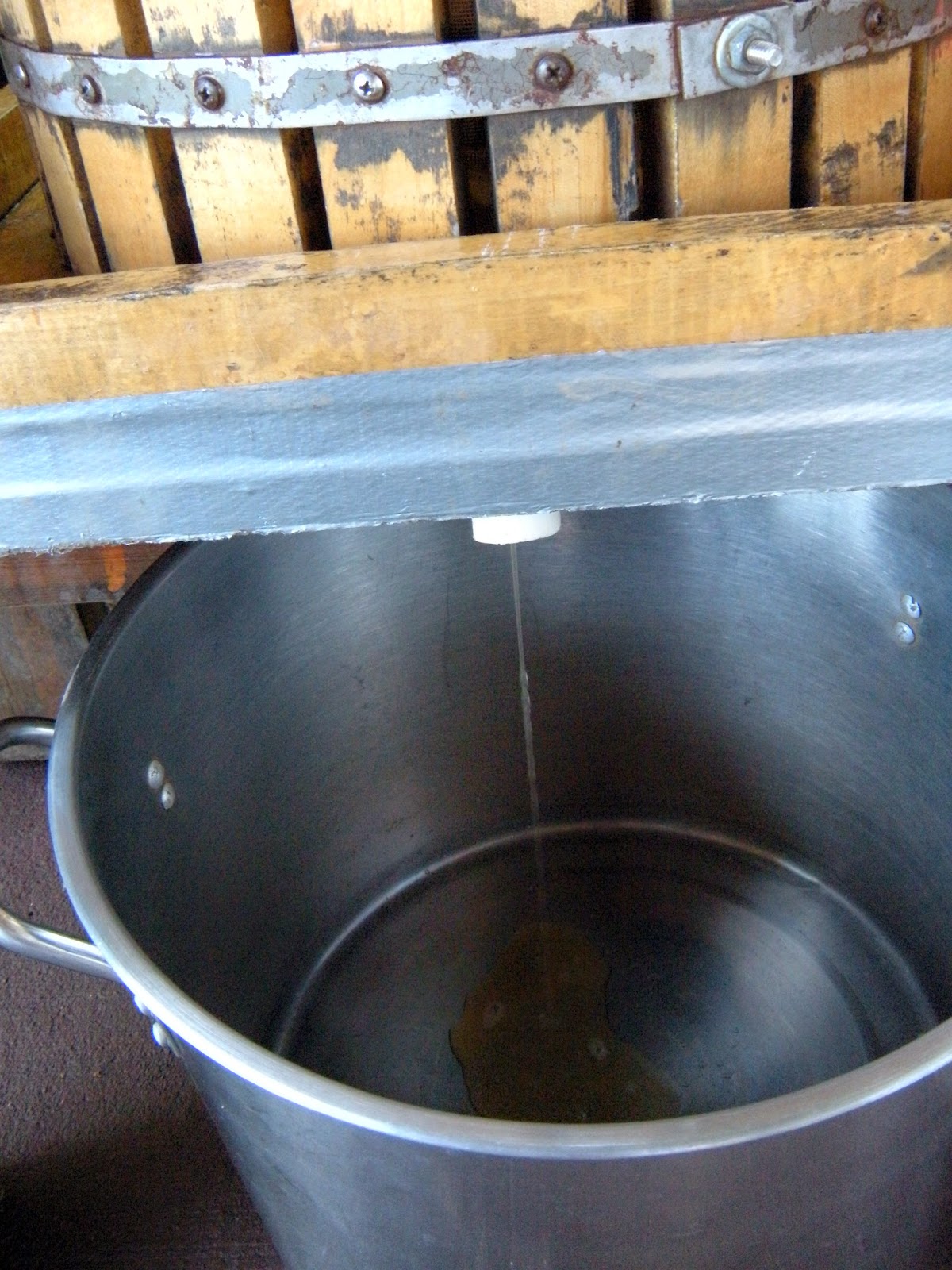
We were so thrilled by the first tiny trickle.


After 10 hours of work on Saturday and 7 hours on Sunday, we yielded approximately 13 gallons of apple juice.  
Our friend pressed 5 gallons of grape juice as well. 

Here is the result of the first 5 gallons before the sediment settled out. 


This is how it looked later in the day.


This is two of us at the end of the second day after 17 hours of pressing.  We're exhausted.


Pressing Day

Pressing Day 


Fresh juice from Golden Russets, Esopus Spitzenberg, Belle de Boskoop, Winter Banana and Hudson's Golden Gem.

Immediately after pressing, the juice was golder in color and definitely not as clear.  We added Campden tablets, (sodium metabisulfite) to kill the natural yeast and it wasn't long before you could see the sediments falling to the bottom.  The next day, we had this lovely golden clear cider.  You can see a faint line where the juice looks clearer on top.

Tomorrow, we'll add the yeast & sugar.


Cider Apples

  The Winter Banana (1876)

A showy apple - pale, thin waxy yellow skin with pink blush.


We found this mild tasting apple very hard but juicy.  I chose to plant it because many people talked about its distinctive banana aftertaste; but honestly, I couldn't discern it.

Although our box of Winter Bananas looked a little spotted, there was no rot inside.  The spots affected only the outside.

The Winter Banana serves as the pollinator for my Esopus Spitzenberg and also the Arkansas Black.